Instructions for Primary Students (Grades 4-6)
Competition Theme
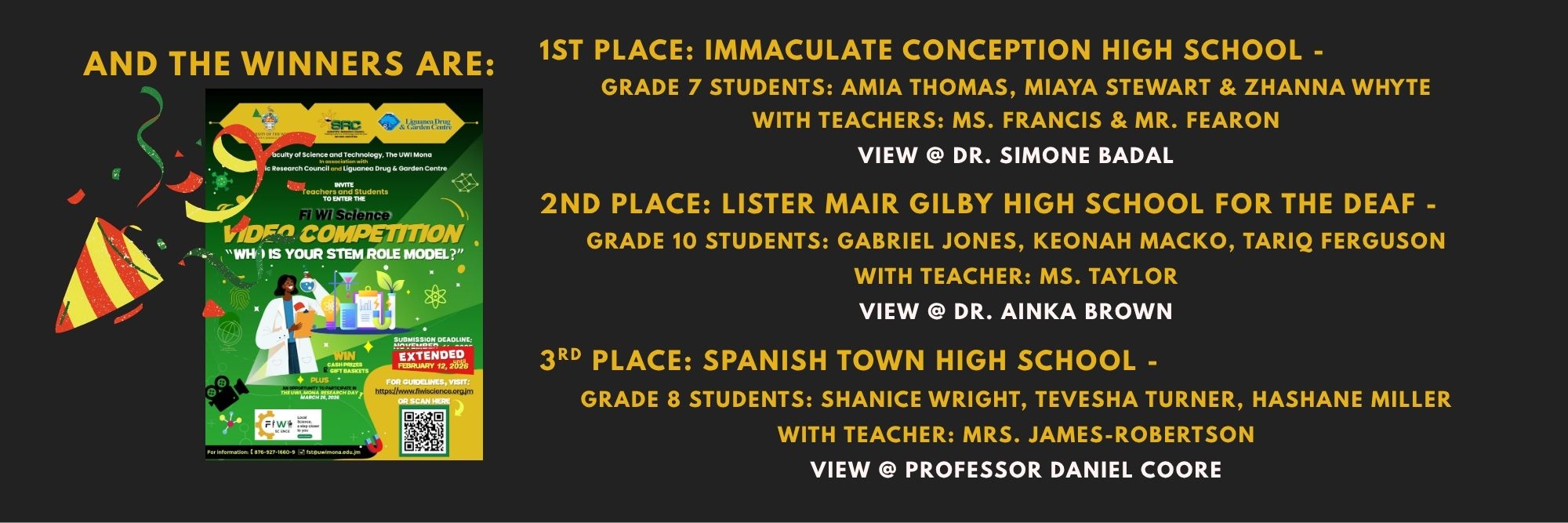
"Who is your STEM Role Model?"
Create a video about a Jamaican scientist from the FiWi Science website who inspires you!
Important Dates
Submission Deadline: Thursday, February 12, 2025 at 5:00 PM
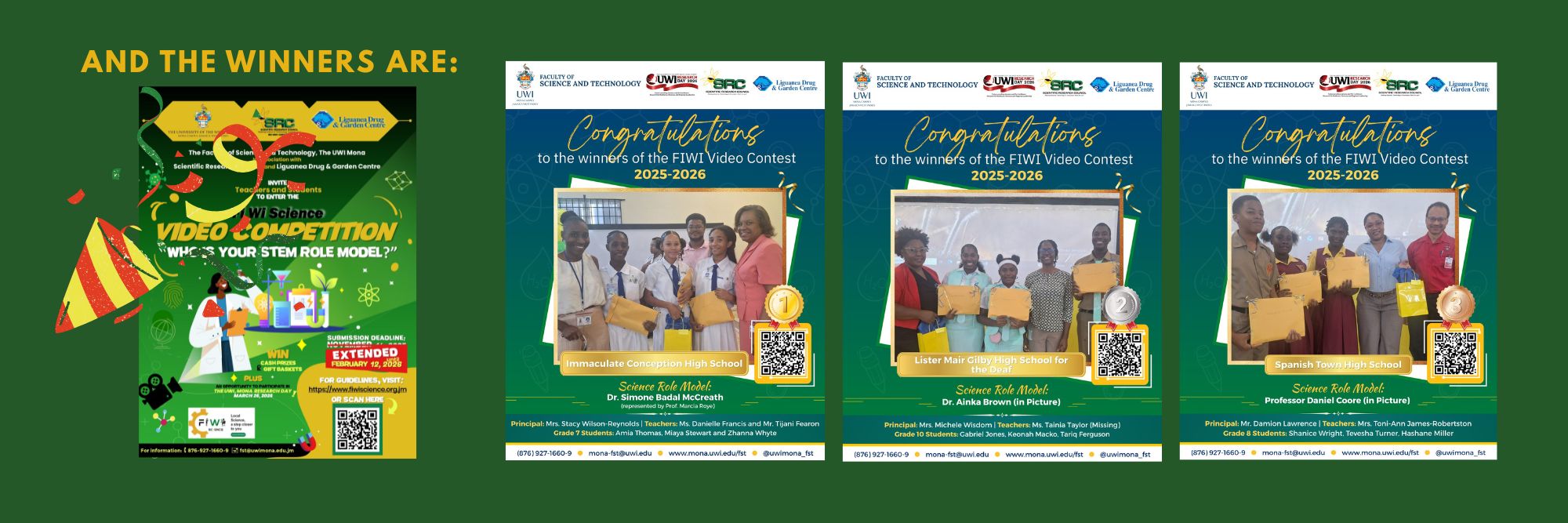
Winners Announced: Week of March 9-13, 2026
Prize Ceremony: Thursday, March 26, 2025 at UWI Mona FST
Eligibility
- Group Entries Only: Groups of no more than 3 students
- Grades: 4, 5, or 6
Video Requirements for PRIMARY Students
- Duration: 2-3 minutes
- Equipment: Phone camera or tablet
- AI Usage: ❌ NOT permitted for primary level
Your Video MUST Include:
- Name of the scientist (from FiWi Science website)
- Information about scientist's personal life (where they were born, schools they attended, etc.)
- One famous aspect of their work or discovery
- Why you would like to be a scientist like them
- All group members actively involved - everyone should participate
- List of credits - showing what each person did
- Your information: Names of group members, grade, school name, and teacher's name
Tips for Success
- Be creative and have fun!
- Use your own words - don't just copy from the internet
- You can use props, drawings, or show pictures of the scientist
- Practice your video before recording the final version
- Make sure everyone in your group gets to speak
- Check that the sound and lighting are good
Judging Criteria (50 points total)
- Content (15 points): Information accuracy, use of creative media
- Clear Message (5 points): How the scientist's work matters
- Language (5 points): Using your own words appropriately
- Creativity & Authenticity (20 points): Original ideas and personal views
- Sharing of Roles (5 points): Everyone in the group participates
What You Can Win!
- Cash prizes and/or gift certificates/baskets for 1st, 2nd, 3rd place groups
- 🎉 1st place groups: Your WHOLE CLASS gets invited to a prize ceremony with a science tour at UWI!
- Your video will be shown on FiWi Science website
- Recognition on UWI FST website and social media
- Certificates for all participants
How to Submit
- Get parental permission - Your parents/guardians must sign the Consent Form
- Fill out the forms - Entry & Consent/Assent Form (get it from FiWi Science website)
- Give forms to your teacher - They will email them to susan.otuokon@uwi.edu
- Upload your video - You'll get a link after forms are submitted
- Submit by: Friday, December 12, 2025 at 5:00 PM
Entry and consent forms:
Need Help?
Ask your teacher or contact:
Coordinator: Dr. Susan Otuokon
Email: susan.otuokon@uwi.edu
Phone: +1 (876) 977-1785