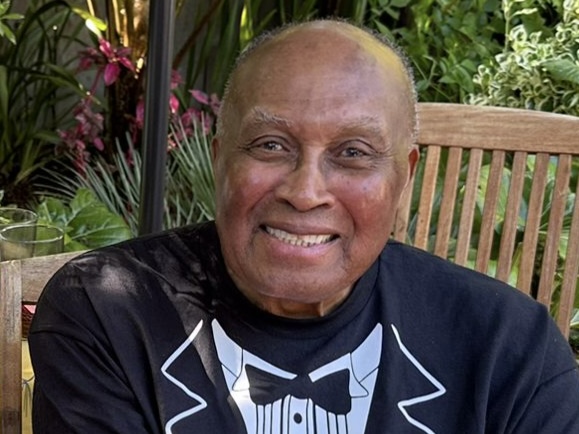




Dr. Ian Bennett is a retired electrical engineer who specialises in telecommunications particularly, speech recognition and language processing and holds over 40 patents for his inventions. Dr. Bennett worked in academia at Stanford University as a researcher and lecturer, in the private sector e.g. Hewlett Packard and he was also a Silicon Valley entrepreneur. He provided technical advice in the 1990s to The University of the West Indies for distance learning and the Government of Jamaica for the development of the Business Process Outsourcing (BPO) Industry.
Dr. Bennett started school at Allman Hill Primary in rural St. Andrew where his father was the headmaster and his mother a teacher. He won a scholarship to study at Happy Grove High School, Portland however his GCE O’level subjects were not in mathematics or science but rather latin, spanish and religious knowledge. His move to Jamaica College for two years of Advanced Level studies led to his interest in mathematics and physics. This interest and a stint working at Reynolds Jamaica Mines after graduation created his desire to study engineering. Recognising his subject deficiencies, he attended night school at St. George’s College, Kingston and took correspondence courses from Wosley Hall, Oxford.
Determined to study engineering, he migrated to Canada in the late 1960s to study at Sir George Williams College in Montreal where he rook remedial science courses needed to gain entry to the engineering school at the University of British Columbia in Vancouver. On graduating with an electrical engineering degree (B.Sc. Hons) he worked with RCA Victor in Montreal. There he designed electronic components for microwave communications and equipment for Canada’s ISIS satellite for mapping the ionosphere layer of Earth’s atmosphere. Dr. Bennett then moved to California, USA to work in the semi-conductor field, manufacturing a variety of electronic devices.
In California he studied at Stanford University where he earned his M.S. in electrical engineering and then his Ph.D. in 1976. His Ph.D. research at Stanford University and Stanford Research Institute focused on algorithms for speech compression. It resulted in the practical implementation of the world's first analog speech processor which allowed human speech to be played back at up to three-times (3X) the recorded rate and be understood. The development of this processor targeted applications and enabled people with vision disabilities to access material more efficiently and timely. This research also had a significant impact for applications involving deep-sea communications between under-sea divers and the surface-based on-board personnel. He was a consultant to the Variable Speech Corporation in Japan, which implemented and licensed integrated versions of this speech processor to consumer manufacturers such as Sharp, JVC, Tandy, Rohm and General Electric.
As an entrepreneur based in Silicon Valley, he developed several personal computer multi-function hardware peripherals incorporating high-resolution graphics and hard disk data compression. He co-founded Portacom Technologies, a manufacturer of one of the first Microsoft Windows personal computer accelerator graphics cards - the Eclipse II product, the recipient of the “1992 PC Magazine’s Editor’s Choice Award” and ranked “Number 74” in “PC Computing Top 200 PC Products of 1992”.
Dr. Bennett has authored numerous publications, including articles in professional journals. His work covers topics such as speech compression, computer graphics, and local area networks, contributing significantly to the fields of electrical engineering and computer science. As an entrepreneur, having founded Phoenix Solutions Inc. and Speaktomi, LLC, he researched speech recognition and natural language processing technologies resulting in numerous patents and a successful natural language query system, the precursor of many of the technologies commonly used today.
As a member of the Technical Staff at Hewlett Packard Laboratories, he contributed to research in charge-coupled devices (CCDs), ultrasonic imaging and computer hardware. Between 2005 and 2010, as a Program Director, Software Services and Education, with the Small Business Innovation Research (SBIR) program at the National Science Foundation’s Directorate of Engineering, he managed research grants totaling over US$45 million.
He held teaching positions at several higher education institutions, including International Technological University and Notre Dame de Namur University, where he developed and taught graduate-level courses in computer science and software engineering. He also contributed to curricula development at Hewlett-Packard and other organizations, focusing on VLSI systems design and local area networks.
His work in the area of natural language processing and distributed speech recognition supported by the National Science Foundation (NSF), resulted in the development of the natural language query system (NLQS) architecture and its implementation in English and Japanese languages.
Dr. Bennett holds 44 issued patents and has 16 pending applications, primarily in speech recognition and natural language processing technologies awarded by the U.S., Japanese and European Patent Offices in the areas of distributed speech recognition, natural language processing, semantic decoding, distributed search architectures, interactive training systems, solid state device physics and ultrasonic imaging include innovations in distributed real-time speech recognition systems and methods for processing speech data.
In 1993 he participated in setting up the UWIDITE teleconferencing-based teaching network which at the time linked the three campuses of the University of the West Indies - Mona Jamaica, St. Augustine Trinidad and Cave Hill Barbados. As the lead consultant for the selection, scope of work and collaboration with the technical partner, Royal Dutch PTT of Holland, he led and directed the task of applying the Internet to the future higher educational needs of Jamaica and the Caribbean region. This work led to the development of the UWI-affiliated Open Campus, now evolved into The UWI Global Campus.
Subsequently as an Information Technology (IT) Specialist Advisor for a Government of Jamaica/Inter-American Development Program project, he formulated the strategic plan for the IT sector of the National Industrial Policy, which incorporated foundations for Internet access and a National Data Network for Jamaica. Recommendations were formulated in the publication, National Industrial Policy, Information Technology Sector, June 1991 authored for the Planning Institute of Jamaica and the Government of Jamaica and the United Nations Development Fund.
He was later engaged by the Port Authority of Jamaica to formulate requirements and make recommendations for telecommunications, network requirements, call centers, physical infrastructure design and market demand for the Portmore Industrial Park, Jamaica. This study and its recommendations resulted in the development of the business process outsourcing (BPO) industry which now employs over 60,000 Jamaicans in several locations such as Portmore, Montego Bay, Morant Bay and elsewhere.
Dr. Bennett served as a member of the 2008-2011 Program Committee of the American Association for the Advancement of Science (AAAS), the IEEE Education Society Award Committee, and was a representative to the NSF Directorate of Engineering’s Working Group on Engineering Education, and the NSF SBIR/STTR Committee on Outreach and Diversity.